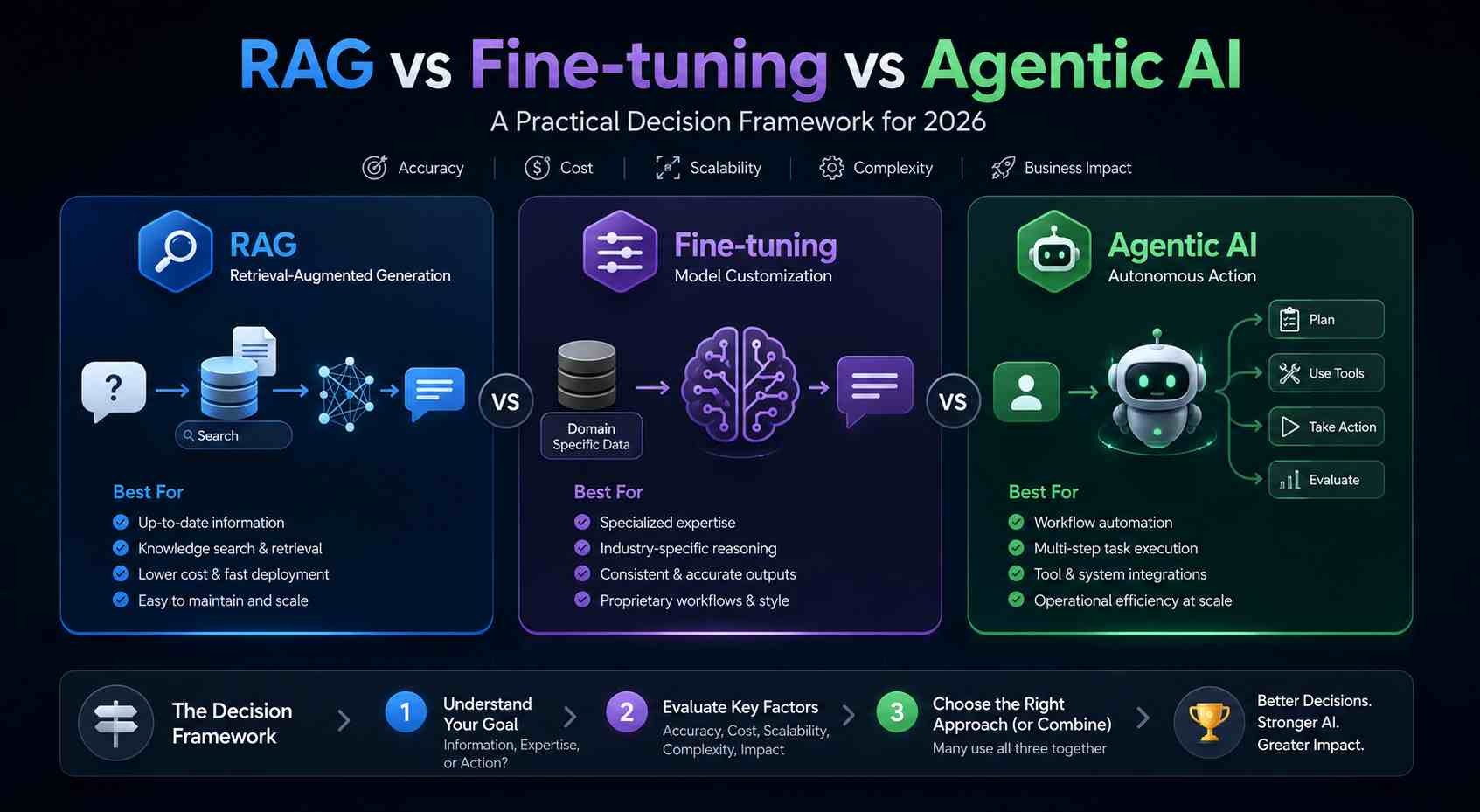
rag-vs-fine-tuning-vs-agentic-ai-decision-framework-2026
Artificial Intelligence has entered a new phase. In 2023 and 2024, businesses were primarily focused on integrating Large Language Models (LLMs) into their workflows. By 2025, Retrieval-Augmented Generation (RAG) became the dominant architecture for enterprise AI systems. Now, in 2026, organizations face a more complex challenge: choosing between RAG, Fine-Tuning, Agentic AI, or a combination of all three.
The problem is that many teams approach these technologies as competitors. In reality, they solve different problems.
A startup building a customer support assistant may benefit most from RAG. A healthcare company seeking highly specialized medical reasoning may require Fine-Tuning. A business automating multi-step workflows across several systems may need Agentic AI.
The wrong choice can result in excessive infrastructure costs, poor performance, compliance risks, and delayed product launches. The right choice can dramatically improve accuracy, efficiency, and return on investment.
This guide provides a practical decision framework to help founders, product managers, AI engineers, and enterprise leaders determine which approach makes the most sense in 2026.
Understanding the Three Approaches
Before comparing them, let's define what each approach actually does.
What Is RAG?
Retrieval-Augmented Generation (RAG) combines a language model with an external knowledge source.
Instead of relying solely on information learned during training, the system retrieves relevant documents, knowledge base articles, PDFs, databases, or company records before generating a response.
The workflow typically looks like this:
1. User asks a question.
2. System searches relevant knowledge sources.
3. Most relevant information is retrieved.
4. Retrieved context is injected into the model prompt.
5. The model generates an answer based on current information.
This approach allows organizations to keep AI responses updated without retraining the model.
Common RAG Applications
- Customer support chatbots
- Internal knowledge assistants
- Legal document search
- Enterprise search systems
- Technical documentation assistants
- Research copilots
What Is Fine-Tuning?
Fine-Tuning modifies the model itself.
Instead of retrieving external information, the model learns patterns, behavior, terminology, style, and domain expertise from specialized datasets.
The resulting model becomes customized for a particular task or industry.
Examples include:
- Medical diagnosis assistants
- Financial analysis tools
- Coding assistants
- Brand-specific content generators
- Industry-specific conversational systems
Fine-Tuning changes the model's weights, making knowledge and behaviors part of the model rather than external context.
What Is Agentic AI?
Agentic AI represents the next evolution of AI systems.
Rather than answering questions, agents pursue goals.
An AI agent can:
- Plan tasks
- Make decisions
- Use tools
- Access APIs
- Interact with software
- Evaluate results
- Execute multiple steps autonomously
For example:
Instead of asking:
- "What's the status of my invoices?"
A user might ask:
- "Review unpaid invoices, send reminders, update our CRM, and provide a summary."
An agent can perform the entire workflow.
Agentic systems combine reasoning, memory, planning, and tool execution into a unified architecture.
The Core Difference
A useful way to think about these technologies is:
| Technology | Primary Goal |
| RAG | Access external knowledge |
| Fine-Tuning | Improve model expertise |
| Agentic AI | Execute actions and workflows |
This distinction alone eliminates much of the confusion surrounding AI architecture decisions.
RAG vs Fine-Tuning
This comparison remains one of the most debated topics in AI development.
Accuracy
RAG excels when information changes frequently.
Examples include:
- Product catalogs
- Company policies
- Regulatory updates
- Technical documentation
Because information is retrieved in real time, responses remain current.
Fine-Tuning struggles here because updating knowledge requires retraining.
Winner: RAG
Domain Expertise
Fine-Tuning performs better when specialized reasoning is required.
Examples:
- Medical interpretation
- Legal reasoning
- Industry-specific terminology
- Scientific analysis
The model develops deeper expertise that retrieval alone cannot provide.
Winner: Fine-Tuning
Cost
RAG is generally cheaper.
Organizations can update data without retraining expensive models.
Fine-Tuning requires:
- Curated datasets
- Training infrastructure
- Evaluation pipelines
- Ongoing maintenance
Winner: RAG
Maintenance
RAG systems are easier to maintain.
Updating a knowledge base takes minutes.
Updating a fine-tuned model may require retraining, testing, and redeployment.
Winner: RAG
Consistency
Fine-Tuned models often produce more consistent outputs because behavior is embedded into the model.
RAG responses may vary depending on retrieval quality.
Winner: Fine-Tuning
RAG vs Agentic AI
Many companies mistakenly assume Agentic AI replaces RAG.
In reality, agents often depend on RAG.
Information Retrieval
RAG specializes in finding information.
Agentic systems specialize in taking action.
If the objective is simply answering questions, RAG is usually sufficient.
Winner: RAG
Workflow Automation
Agentic AI dominates workflow execution.
Examples include:
- Booking meetings
- Updating databases
- Creating reports
- Managing support tickets
- Coordinating multiple software tools
Winner: Agentic AI
Complexity
RAG systems are relatively straightforward.
Agentic architectures introduce:
- Planning layers
- Tool integrations
- Memory systems
- Monitoring frameworks
- Safety mechanisms
Winner: RAG
Business Impact
For organizations seeking operational automation, Agentic AI often creates greater business value.
Instead of informing employees, agents can complete work.
Winner: Agentic AI
Fine-Tuning vs Agentic AI
These approaches address entirely different dimensions.
Fine-Tuning improves intelligence.
Agentic AI improves execution.
A highly specialized medical model may still require an agent to:
- Gather patient records
- Analyze test results
- Generate reports
- Notify physicians
Similarly, an agent may benefit from a fine-tuned model to improve decision quality.
The comparison is therefore less competitive and more complementary.
The Hidden Truth: Most Successful Systems Use All Three
The most advanced AI products in 2026 rarely rely on a single approach.
Instead, they combine:
- RAG for knowledge access
- Fine-Tuning for expertise
- Agentic AI for execution
Consider an enterprise IT assistant.
The assistant might:
1. Retrieve company policies using RAG.
2. Use a fine-tuned model trained on internal IT procedures.
3. Act as an agent that creates tickets, provisions accounts, and updates systems.
This hybrid architecture often delivers the best results.
Decision Framework for Businesses
The following framework simplifies technology selection.
Choose RAG If:
Your organization needs:
- Up-to-date information
- Knowledge search
- Document retrieval
- Lower implementation costs
- Fast deployment
Examples:
- Support assistants
- Knowledge bases
- Employee copilots
- Research systems
Choose Fine-Tuning If:
Your organization needs:
- Specialized expertise
- Consistent outputs
- Industry-specific reasoning
- Custom communication style
- Proprietary workflows
Examples:
- Medical AI
- Financial analysis
- Legal technology
- Coding assistants
Choose Agentic AI If:
Your organization needs:
- Process automation
- Multi-step execution
- Software integrations
- Autonomous workflows
- Operational efficiency
Examples:
- Operations assistants
- AI project managers
- CRM automation
- Workflow orchestration
Cost Comparison in 2026
Organizations should evaluate total ownership cost rather than implementation cost alone.
RAG
Typical expenses:
- Vector database
- Embedding generation
- Retrieval infrastructure
- LLM usage
Advantages:
- Low maintenance
- Easy updates
- Fast deployment
Fine-Tuning
Typical expenses:
- Data collection
- Dataset labeling
- Training infrastructure
- Evaluation testing
- Continuous retraining
Advantages:
- High specialization
- Strong consistency
Agentic AI
Typical expenses:
- Tool integrations
- Security controls
- Monitoring systems
- Workflow orchestration
- Agent evaluation
Advantages:
- Greater automation value
- Productivity gains
Performance Comparison
Response Accuracy
Best Choice:
RAG + Fine-Tuning
Knowledge retrieval combined with domain expertise produces superior outcomes.
Task Completion
Best Choice:
Agentic AI
No other architecture can autonomously execute workflows at scale
Scalability
Best Choice:
RAG
Knowledge bases scale more efficiently than repeated retraining cycles.
Adaptability
Best Choice:
Agentic AI
Agents can incorporate new tools and workflows without rebuilding entire systems.
Common Mistakes Companies Make
Mistake #1:
Fine-Tuning for Frequently Changing Information
Many organizations fine-tune models on information that changes weekly.
This creates unnecessary retraining costs.
RAG is usually the better solution.
Mistake #2:
Using Agents for Simple Q&A
Not every assistant needs autonomous workflows.
Adding agent layers increases complexity and operational risk.
Mistake #3:
Assuming RAG Solves Expertise Problems
RAG provides information access.
It does not automatically improve reasoning quality.
Domain expertise may still require Fine-Tuning.
Mistake #4:
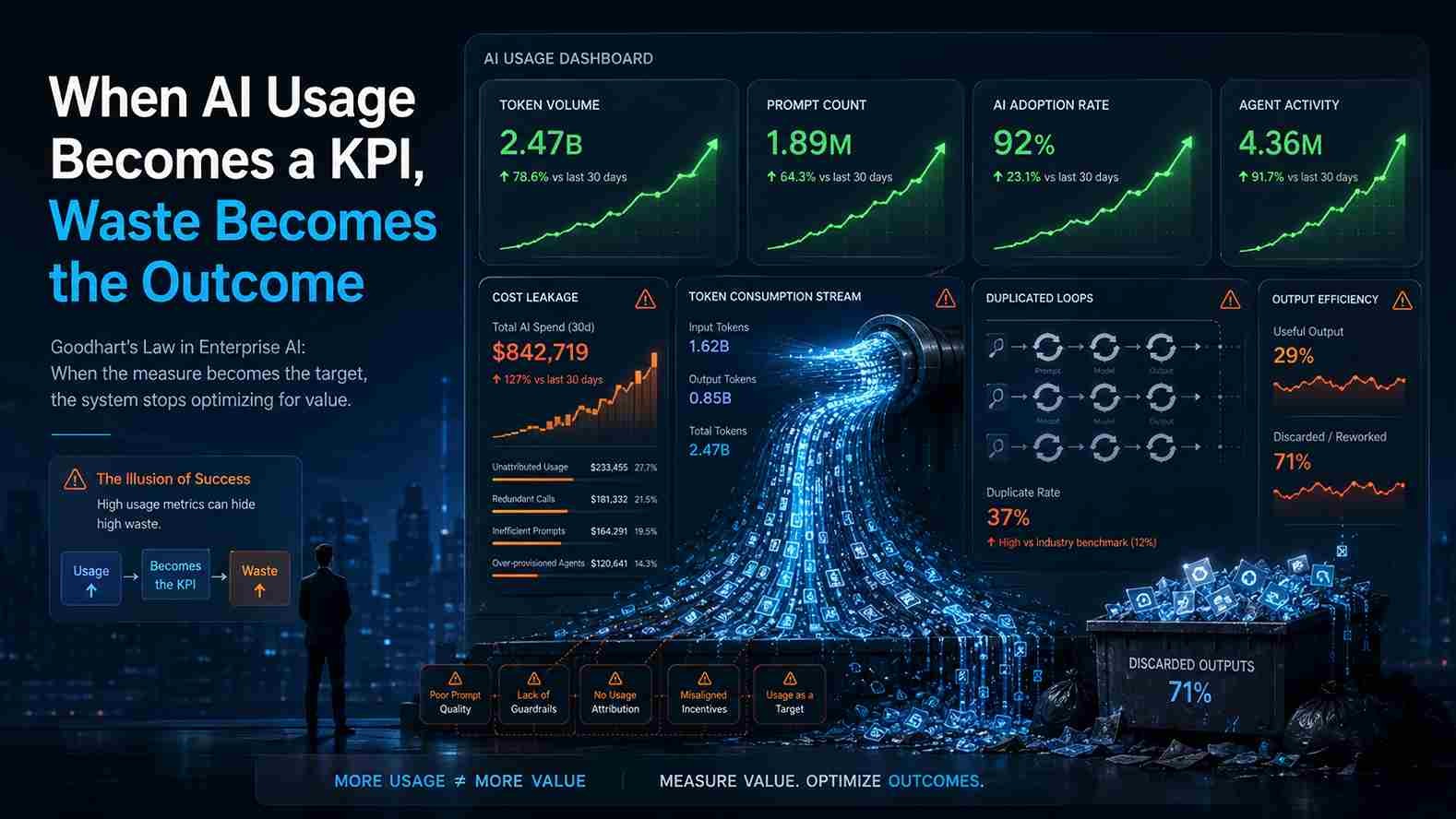
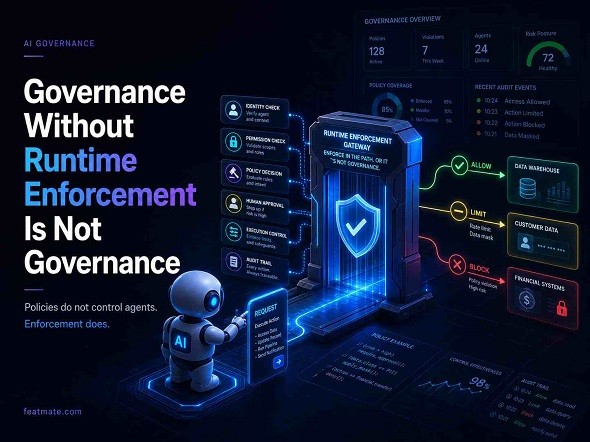
Ignoring Governance
As AI systems gain autonomy, governance becomes critical.
Organizations should implement:
- Human oversight
- Permission controls
- Audit logs
- Evaluation frameworks
- Safety guardrails
What the Future Looks Like
The future is not RAG versus Fine-Tuning versus Agentic AI.
The future is orchestration.
Modern AI systems are becoming layered architectures where:
- RAG supplies knowledge.
- Fine-Tuned models provide expertise.
- Agents execute actions.
As models continue improving, competitive advantage will increasingly come from system design rather than model selection alone.
Companies that understand how these technologies work together will build more reliable, scalable, and valuable AI products than those pursuing a single solution.
Final Verdict
f your goal is answering questions with current information, choose RAG.
If your goal is creating highly specialized AI expertise, choose Fine-Tuning.
If your goal is automating workflows and completing tasks, choose Agentic AI.
For most organizations in 2026, however, the strongest strategy is not choosing one over the others. It is combining them intelligently.
The most successful AI systems will retrieve the right information, apply the right expertise, and take the right actions all within a unified architecture.
That is the practical decision framework that modern businesses should follow when designing AI products and services in 2026.
Tags
Categories (22)
- All (27)
- Network Administration (4)
- Virtualization (2)
- DevOps (6)
- Backup (0)
- Web Hosting Control Panel (0)
- Cloud Management (0)
- Server Management (1)
- Database (1)
- Cybersecurity (1)
- Programming & Tech (0)
- Artificial Intelligence (AI) (9)
- Engineering Productivity (1)
- Platform Engineering (2)
- AI Strategy & Consulting (0)
- LLM Integration & Application Development (0)
- AI Agents & Workflow Automation (0)
- Machine Learning Engineering (0)
- Model Training & Fine-Tuning (0)
- MLOps & AI Infrastructure (0)
- Data Engineering for AI (0)
- AI Security, Safety & Compliance (0)
- AI Delivery & Fractional Leadership (0)


Join as a freelancer or client
Join as a Freelancer
Join as a Client